Keynote Speakers

Ralph E. Steuer
University of Georgia
Title: On the Differences between Bi-Criterion and Tri-Criterion Portfolio Selection in Graphs
Abstract:
In bi-criterion (risk-return) portfolio selection the theory of Markowitz is known to all financial professionals. However, there is no theory of that stature pertaining to the rapidly growing area of tri-criterion (for example, with ESG) portfolio selection in which the efficient frontier becomes an efficient surface. Furthermore, in contrast to an efficient frontier, it is virtually impossible to identify one's best point on an efficient surface by just looking at it. There are other difficulties, but all can be overcome toward the goal of doing so in an intellectually sound yet conceptually simplistic fashion. Many 3-space graphs are used to illustrate.
In bi-criterion (risk-return) portfolio selection the theory of Markowitz is known to all financial professionals. However, there is no theory of that stature pertaining to the rapidly growing area of tri-criterion (for example, with ESG) portfolio selection in which the efficient frontier becomes an efficient surface. Furthermore, in contrast to an efficient frontier, it is virtually impossible to identify one's best point on an efficient surface by just looking at it. There are other difficulties, but all can be overcome toward the goal of doing so in an intellectually sound yet conceptually simplistic fashion. Many 3-space graphs are used to illustrate.
Speaker Biography:
Ralph E. Steuer is the Sanford Family Distinguished Chair of Business in the Department of Finance at the University of Georgia. He has an electrical engineering degree from Brown University, an MBA from Cornell University, and a Ph.D. in quantitative methods in business from the University of North Carolina. He is the author of "Multiple Criteria Optimization: Theory, Computation and Application" and over 100 research articles. His research interests are in multiple-attribute portfolio theory, sustainable investing, and multiple criteria optimization. Prior to joining the University of Georgia, he was a Visiting Associate Professor at Princeton University (one year) and on the faculty of the University of Kentucky (eight years).
Ralph E. Steuer is the Sanford Family Distinguished Chair of Business in the Department of Finance at the University of Georgia. He has an electrical engineering degree from Brown University, an MBA from Cornell University, and a Ph.D. in quantitative methods in business from the University of North Carolina. He is the author of "Multiple Criteria Optimization: Theory, Computation and Application" and over 100 research articles. His research interests are in multiple-attribute portfolio theory, sustainable investing, and multiple criteria optimization. Prior to joining the University of Georgia, he was a Visiting Associate Professor at Princeton University (one year) and on the faculty of the University of Kentucky (eight years).
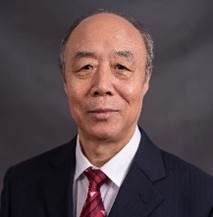
Yanzhong Dang
Dalian University of Technology
Title: "Third Data" and its Spiral Pattern of Knowledge Creation
Abstract:
In the current big data boom, there is a very important and extremely valuable data that has been left out in the cold, which is the third data. The third data is the special data generated in the process of problem processing, which contains extremely dense problem solving knowledge, and is an indispensable knowledge resource for big data, knowledge management research and solving practical problems. A "problem" is a perceived contradiction that people are trying to eliminate, such as product defects, equipment failures, abnormal production line downtime, innovative design of new products, team building, etc.
The main contents of this report include: 1. Definition, characteristics and essential differences between the third data and the first data and the second data; 2. The source and generation process of the third data; 3. Illustrate the value of the third data with real cases; 4. Compared with the first data and the second data, the third data is the data with the highest knowledge density and the most complete knowledge type; 5. It reveals the knowledge creation model based on the third data which conforms to the objective reality and is expressed as the " Pentagonal model".
In reality, there is a wide range of third data in manufacturing production and management, and enterprises have a full understanding of its potential value of reducing costs, improving efficiency and enhancing creativity. However, due to the lack of complete theories, methods and tools related to the third data, the third data is not fully used, resulting in a great waste of knowledge resources.
"Problems" exist widely in all aspects of human society, so the third data theory is not only applicable to the manufacturing industry, but also to the service industry, even in the field of social economy has universal applicability.
In the current big data boom, there is a very important and extremely valuable data that has been left out in the cold, which is the third data. The third data is the special data generated in the process of problem processing, which contains extremely dense problem solving knowledge, and is an indispensable knowledge resource for big data, knowledge management research and solving practical problems. A "problem" is a perceived contradiction that people are trying to eliminate, such as product defects, equipment failures, abnormal production line downtime, innovative design of new products, team building, etc.
The main contents of this report include: 1. Definition, characteristics and essential differences between the third data and the first data and the second data; 2. The source and generation process of the third data; 3. Illustrate the value of the third data with real cases; 4. Compared with the first data and the second data, the third data is the data with the highest knowledge density and the most complete knowledge type; 5. It reveals the knowledge creation model based on the third data which conforms to the objective reality and is expressed as the " Pentagonal model".
In reality, there is a wide range of third data in manufacturing production and management, and enterprises have a full understanding of its potential value of reducing costs, improving efficiency and enhancing creativity. However, due to the lack of complete theories, methods and tools related to the third data, the third data is not fully used, resulting in a great waste of knowledge resources.
"Problems" exist widely in all aspects of human society, so the third data theory is not only applicable to the manufacturing industry, but also to the service industry, even in the field of social economy has universal applicability.
Speaker Biography:
Dang Yanzhong, Professor of Dalian University of Technology, was the chairman of the first "Chinese Society of Systems Engineering Data Science and Knowledge Systems Engineering Committee", and was the vice chairman of the first and second "Chinese Society of Management Science and Engineering". He has been engaged in the theoretical and application research of systems engineering, knowledge management, intelligent decision support system (IDSS), informatization and management reform, and agricultural systems engineering for a long time, and has developed 12 IDSS. IDSS developed for FAW cars in the manufacturing field has been running continuously for more than ten years, and has achieved good economic and management benefits. The "intelligent, integrated and interactive county-level agricultural planning decision support system" developed in 1984 won the third prize of Scientific and Technological Progress of Liaoning Province in 1991. Since 2000, he has conducted more than 20 years of accompanying systematic research on the informatization and management reform of the National Natural Science Foundation Committee (NSFC), and 20 research reports have been adopted by NSFC. In the 1980s, pioneering theoretical and application achievements were made in the field of agricultural systems engineering, which was widely promoted in the field of agricultural systems engineering throughout the country.
The theory of "product life cycle oriented knowledge coordination management", the concept and theoretical framework of "third data", and the spiral model of knowledge creation based on "third data", the Pentagonal model, are put forward. He published the knowledge management monograph Theory and Method of Knowledge Coordination Management for Product Life Cycle and the system science monograph Theory and Method of System Analysis, etc., and obtained a number of invention patents and software Copyrights. He has won three provincial and ministerial science and technology progress awards and other science and technology awards, and won the "System Science and System Engineering Science Contribution Award of the Chinese Society of Systems Engineering" in 2022.
Dang Yanzhong, Professor of Dalian University of Technology, was the chairman of the first "Chinese Society of Systems Engineering Data Science and Knowledge Systems Engineering Committee", and was the vice chairman of the first and second "Chinese Society of Management Science and Engineering". He has been engaged in the theoretical and application research of systems engineering, knowledge management, intelligent decision support system (IDSS), informatization and management reform, and agricultural systems engineering for a long time, and has developed 12 IDSS. IDSS developed for FAW cars in the manufacturing field has been running continuously for more than ten years, and has achieved good economic and management benefits. The "intelligent, integrated and interactive county-level agricultural planning decision support system" developed in 1984 won the third prize of Scientific and Technological Progress of Liaoning Province in 1991. Since 2000, he has conducted more than 20 years of accompanying systematic research on the informatization and management reform of the National Natural Science Foundation Committee (NSFC), and 20 research reports have been adopted by NSFC. In the 1980s, pioneering theoretical and application achievements were made in the field of agricultural systems engineering, which was widely promoted in the field of agricultural systems engineering throughout the country.
The theory of "product life cycle oriented knowledge coordination management", the concept and theoretical framework of "third data", and the spiral model of knowledge creation based on "third data", the Pentagonal model, are put forward. He published the knowledge management monograph Theory and Method of Knowledge Coordination Management for Product Life Cycle and the system science monograph Theory and Method of System Analysis, etc., and obtained a number of invention patents and software Copyrights. He has won three provincial and ministerial science and technology progress awards and other science and technology awards, and won the "System Science and System Engineering Science Contribution Award of the Chinese Society of Systems Engineering" in 2022.
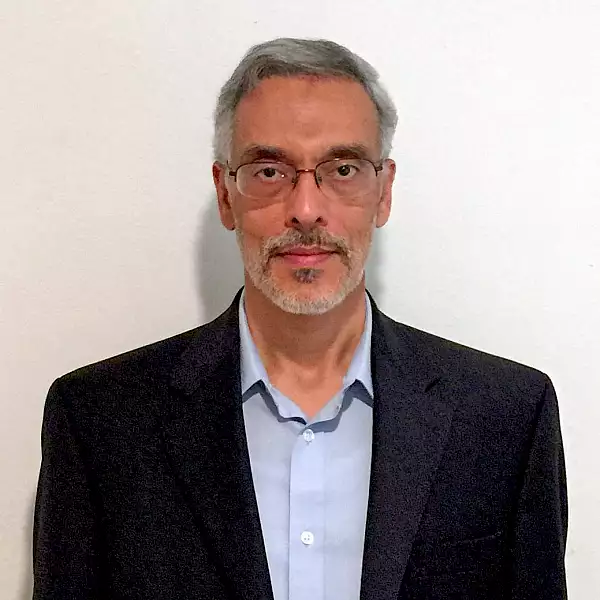
Mohamed Abdel-Mottaleb
Indiana University Indianapolis
Title: Applications of Deep Learning in Ophthalmology and Oncology
Abstract:
In this presentation, I will provide an overview of our research in Machine Learning for ophthalmology and oncology, focusing on the transformative role of deep learning in these fields. In ophthalmology, I will discuss our work on diagnosing glaucoma from retinal fundus images using deep learning algorithms, as well as our new segmentation techniques for measuring corneal layer thickness from Optical Coherence Tomography (OCT) images. These approaches are important for detecting subtle changes associated with corneal diseases such as Fuchs' dystrophy, keratoconus, and corneal graft rejection. Additionally, I will introduce a novel assistive solution for individuals with severe glaucoma or macular degeneration. I will discuss the future of AI in ophthalmology, where ophthalmologists can expect to see AI changing the way we detect cataracts, capture 3D images, and train surgeons. Generative AI may eventually contribute to developing algorithms to diagnose rare diseases. In oncology, I will highlight our efforts in assessing neoadjuvant treatment efficacy and improving mass detection across different mammogram views. I will present how deep learning-based approaches can assist in the early prediction of neoadjuvant treatment outcomes from multimodal data, empowering oncologists to make more informed and effective treatment decisions. Looking ahead, I will discuss how AI's future in oncology will likely see increased integration with radiomics and genomics to enable personalized treatment plans. In addition, I will also discuss the potential of federated learning in medical imaging, emphasizing how it can enhance data privacy and security in healthcare.
In this presentation, I will provide an overview of our research in Machine Learning for ophthalmology and oncology, focusing on the transformative role of deep learning in these fields. In ophthalmology, I will discuss our work on diagnosing glaucoma from retinal fundus images using deep learning algorithms, as well as our new segmentation techniques for measuring corneal layer thickness from Optical Coherence Tomography (OCT) images. These approaches are important for detecting subtle changes associated with corneal diseases such as Fuchs' dystrophy, keratoconus, and corneal graft rejection. Additionally, I will introduce a novel assistive solution for individuals with severe glaucoma or macular degeneration. I will discuss the future of AI in ophthalmology, where ophthalmologists can expect to see AI changing the way we detect cataracts, capture 3D images, and train surgeons. Generative AI may eventually contribute to developing algorithms to diagnose rare diseases. In oncology, I will highlight our efforts in assessing neoadjuvant treatment efficacy and improving mass detection across different mammogram views. I will present how deep learning-based approaches can assist in the early prediction of neoadjuvant treatment outcomes from multimodal data, empowering oncologists to make more informed and effective treatment decisions. Looking ahead, I will discuss how AI's future in oncology will likely see increased integration with radiomics and genomics to enable personalized treatment plans. In addition, I will also discuss the potential of federated learning in medical imaging, emphasizing how it can enhance data privacy and security in healthcare.
Speaker Biography:
Mohamed Abdel-Mottaleb received the Ph.D. degree in computer science from the University of Maryland, College Park, in 1993. He joined Indiana University (IU), Indianapolis, in 2024, as the Luddy Professor and Founding Chair of Computer Science. Before joining IU, he was a Professor and Chairman of the Department of Electrical and Computer Engineering at the University of Miami. His research interests span biometrics, visual tracking, human activity recognition, and medical image processing. Prior to joining the University of Miami, he was with Philips Research, Briarcliff Manor, NY, from 1993 to 2000, where he was a Principal Member of the Research Staff and a Project Leader. At Philips Research, he led several projects in image processing and content-based multimedia retrieval. He represented Philips in the standardization activity of ISO for MPEG-7, where some of his work was included in the standard. He holds 23 U.S. patents and more than 30 international patents. He published more than 180 journal and conference papers in the areas of image processing, computer vision, and content-based retrieval. He has been an IEEE fellow since January 2011.
Mohamed Abdel-Mottaleb received the Ph.D. degree in computer science from the University of Maryland, College Park, in 1993. He joined Indiana University (IU), Indianapolis, in 2024, as the Luddy Professor and Founding Chair of Computer Science. Before joining IU, he was a Professor and Chairman of the Department of Electrical and Computer Engineering at the University of Miami. His research interests span biometrics, visual tracking, human activity recognition, and medical image processing. Prior to joining the University of Miami, he was with Philips Research, Briarcliff Manor, NY, from 1993 to 2000, where he was a Principal Member of the Research Staff and a Project Leader. At Philips Research, he led several projects in image processing and content-based multimedia retrieval. He represented Philips in the standardization activity of ISO for MPEG-7, where some of his work was included in the standard. He holds 23 U.S. patents and more than 30 international patents. He published more than 180 journal and conference papers in the areas of image processing, computer vision, and content-based retrieval. He has been an IEEE fellow since January 2011.
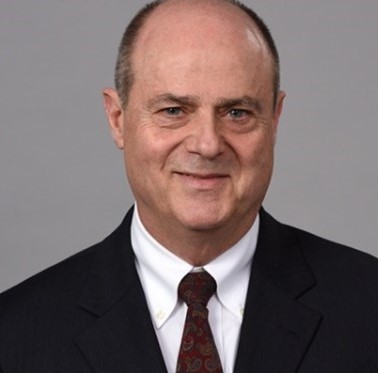
Luis G. Vargas
University of Pittsburgh
Title: Cognitive AI in Conflict Resolution
Abstract:
Were one to ask an AI system to answer the question “Would a machine such as you be able to negotiate a conflict impartially?”, the answer reveals major issues with AI systems today such as potential bias in training data, understanding impartiality, lack of emotional intelligence, and the need for transparency and explainability. We propose a way to address these issues with research involving the Analytic Hierarchy Process and its extensions to the continuous case, and how our approach can be used in conflict resolution.
Were one to ask an AI system to answer the question “Would a machine such as you be able to negotiate a conflict impartially?”, the answer reveals major issues with AI systems today such as potential bias in training data, understanding impartiality, lack of emotional intelligence, and the need for transparency and explainability. We propose a way to address these issues with research involving the Analytic Hierarchy Process and its extensions to the continuous case, and how our approach can be used in conflict resolution.
Speaker Biography:
Luis G. Vargas was the recipient of the Juan March Foundation Scholarship, Madrid, Spain, to the University of Pennsylvania in 1976-78. He won the Outstanding Professor of the Year Award at the Joseph M. Katz Graduate School of Business in 1984. He was the coordinator of the Quantitative Interest Group from 1987 to 1991; the coordinator of the Artificial Intelligence Interest Group from 1991 to 1994; Area Director of Decision, Operations and Information Technology 2009-2012; chair of the Second International Symposium on the Analytic Hierarchy Process (ISAHP), held in Pittsburgh August 11-14, 1991, at the Joseph M. Katz Graduate School of Business; and the 15th ISAHP held in Hong Kong July 12-15, 2018. He is also Founder and Director of the International Center for Conflict Resolution 2018. Luis Vargas has focused his research on decision theory, practical applications of the Analytic Hierarchy Process (AHP, measurement of resource utilization, group decision making, forecasting, and conflict resolution).
Luis G. Vargas was the recipient of the Juan March Foundation Scholarship, Madrid, Spain, to the University of Pennsylvania in 1976-78. He won the Outstanding Professor of the Year Award at the Joseph M. Katz Graduate School of Business in 1984. He was the coordinator of the Quantitative Interest Group from 1987 to 1991; the coordinator of the Artificial Intelligence Interest Group from 1991 to 1994; Area Director of Decision, Operations and Information Technology 2009-2012; chair of the Second International Symposium on the Analytic Hierarchy Process (ISAHP), held in Pittsburgh August 11-14, 1991, at the Joseph M. Katz Graduate School of Business; and the 15th ISAHP held in Hong Kong July 12-15, 2018. He is also Founder and Director of the International Center for Conflict Resolution 2018. Luis Vargas has focused his research on decision theory, practical applications of the Analytic Hierarchy Process (AHP, measurement of resource utilization, group decision making, forecasting, and conflict resolution).
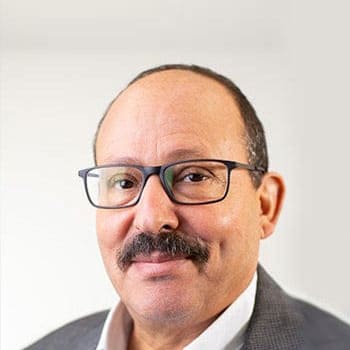
Fouad Ben Abdelaziz
NEOMA Business School
Title: Multiobjective Stochastic Optimization for Portfolio Selection
Abstract:
We present the primary models for multi-objective optimization, examining the stochastic nature of certain parameters. Following this, we introduce key concepts and models for Multi-objective Stochastic Optimization. We define the concept of an efficient solution in a stochastic context. Additionally, we discuss the portfolio selection problem with stochastic parameters and explore strategies to address these challenges.
We present the primary models for multi-objective optimization, examining the stochastic nature of certain parameters. Following this, we introduce key concepts and models for Multi-objective Stochastic Optimization. We define the concept of an efficient solution in a stochastic context. Additionally, we discuss the portfolio selection problem with stochastic parameters and explore strategies to address these challenges.
Speaker Biography:
Dr. Ben Abdelaziz is currently a Distinguished Professor at NEOMA Business School, France and the chair of the MSc of Artificial Intelligence for Business Program at the same institution. Previously, he served as a Senior Fulbright scholar at the Rutgers Center for Operations Research, Rutgers University, NJ. He earned his PhD in Operations and Decision Systems from Laval University, Canada, and holds an MBA and a BSc in Mathematics from the University of Tunis.
Throughout his career, Dr. Ben Abdelaziz has held academic positions at prestigious institutions including the University of Dubai, UAE, the American University of Beirut, Lebanon, and the University of Tunis, Tunisia. He has also been a visiting scholar at Pace University, NY, USA; Coimbra University, Portugal; University of Milan, Italy; CFVG, Vietnam; Laurentian University, Canada; and Nizwa University, Oman, among others.
Dr. Ben Abdelaziz is recognized as a leading researcher in Multi-objective Stochastic Optimization and Multi-attribute Portfolio Selection. His research contributions have been published in esteemed journals such as EJOR, JORS, IJAR, FSS, ANOR, and CAIE. He has also served as a Guest Editor for the European Journal of Operations Research and Fuzzy Sets and Systems.
Beyond his research, Dr. Ben Abdelaziz has organized and chaired numerous international conferences, including the Multi-objective and Goal Programming Conference (MOPGP). He has held leadership roles as Director of the LARODEC Lab at the University of Tunis, Director of the Doctoral School at the Higher Institute of Management at the University of Tunis, Director of the MSc program in Supply Chains at NEOMA, France, and Director of the Doctoral School at NEOMA, France. He was also the chair of the inaugural conference of AFROS (African Federation of Operational Research Societies) and chaired the MCDM24 conference.
Dr. Ben Abdelaziz is currently a Distinguished Professor at NEOMA Business School, France and the chair of the MSc of Artificial Intelligence for Business Program at the same institution. Previously, he served as a Senior Fulbright scholar at the Rutgers Center for Operations Research, Rutgers University, NJ. He earned his PhD in Operations and Decision Systems from Laval University, Canada, and holds an MBA and a BSc in Mathematics from the University of Tunis.
Throughout his career, Dr. Ben Abdelaziz has held academic positions at prestigious institutions including the University of Dubai, UAE, the American University of Beirut, Lebanon, and the University of Tunis, Tunisia. He has also been a visiting scholar at Pace University, NY, USA; Coimbra University, Portugal; University of Milan, Italy; CFVG, Vietnam; Laurentian University, Canada; and Nizwa University, Oman, among others.
Dr. Ben Abdelaziz is recognized as a leading researcher in Multi-objective Stochastic Optimization and Multi-attribute Portfolio Selection. His research contributions have been published in esteemed journals such as EJOR, JORS, IJAR, FSS, ANOR, and CAIE. He has also served as a Guest Editor for the European Journal of Operations Research and Fuzzy Sets and Systems.
Beyond his research, Dr. Ben Abdelaziz has organized and chaired numerous international conferences, including the Multi-objective and Goal Programming Conference (MOPGP). He has held leadership roles as Director of the LARODEC Lab at the University of Tunis, Director of the Doctoral School at the Higher Institute of Management at the University of Tunis, Director of the MSc program in Supply Chains at NEOMA, France, and Director of the Doctoral School at NEOMA, France. He was also the chair of the inaugural conference of AFROS (African Federation of Operational Research Societies) and chaired the MCDM24 conference.