Keynote Speakers

George Metakides
Universities of Southampton and Vienna,
Honorary President of the Digital Enlightenment Forum
Honorary President of the Digital Enlightenment Forum
Title: Can digital humanism help enlighten the age of AI ?
Abstract:
The developments in generative AI as the current spearhead of digital technologies have generated hyperbole, in both expectations and fears, but have also created added awareness that action needs to be taken if the power of these technologies are to be effectively harnessed for the benefit of humanity. We take inspiration from the 18th century enlightenment which followed the industrial revolution, with roots in Renaissance humanism, as a metaphor for a digital enlightenment movement for a humanistic, anthropocentric digital society where people enjoy the kinds of autonomy and freedom online that they enjoy offline and where the privacy, dignity and rights of the individual are respected and supported. Accelerating AI advances will not automatically bring shared prosperity and collective well being if the decisions on the related research and application development directions are left exclusively in the hands of a very small number of very large companies which could lead to a digital dark age of cultural decline and economic exploitation as any sobering assessment of our digital ecosystem shows. A combination of research, regulation and public investment are needed to re-democratise the digital ecosystem so as to ensure equal opportunities in harvesting the potentially immense benefits of the new technologies.
The developments in generative AI as the current spearhead of digital technologies have generated hyperbole, in both expectations and fears, but have also created added awareness that action needs to be taken if the power of these technologies are to be effectively harnessed for the benefit of humanity. We take inspiration from the 18th century enlightenment which followed the industrial revolution, with roots in Renaissance humanism, as a metaphor for a digital enlightenment movement for a humanistic, anthropocentric digital society where people enjoy the kinds of autonomy and freedom online that they enjoy offline and where the privacy, dignity and rights of the individual are respected and supported. Accelerating AI advances will not automatically bring shared prosperity and collective well being if the decisions on the related research and application development directions are left exclusively in the hands of a very small number of very large companies which could lead to a digital dark age of cultural decline and economic exploitation as any sobering assessment of our digital ecosystem shows. A combination of research, regulation and public investment are needed to re-democratise the digital ecosystem so as to ensure equal opportunities in harvesting the potentially immense benefits of the new technologies.
Speaker Biography:
George Metakides born in Thessaloniki, Greece, George Metakides received his Ph.D. in Mathematical Logic from Cornell University in 1971. He is currently visiting professor at the Universities of Southampton and Vienna, Honorary President of the Digital Enlightenment Forum, Board Member of Digital Humanism and Advisor to several international organizations. He has contributed to the establishment of international institutions (including the launch of the World Wide Web consortium in 1993), has received a number of awards and honorary degrees and is a corresponding member of several National Academies. He is involved in the analysis of the economic, political and social impact of digitization , and related regulatory issues and the promotion of international cooperation towards a digital ecosystem respecting shared human values.
George Metakides born in Thessaloniki, Greece, George Metakides received his Ph.D. in Mathematical Logic from Cornell University in 1971. He is currently visiting professor at the Universities of Southampton and Vienna, Honorary President of the Digital Enlightenment Forum, Board Member of Digital Humanism and Advisor to several international organizations. He has contributed to the establishment of international institutions (including the launch of the World Wide Web consortium in 1993), has received a number of awards and honorary degrees and is a corresponding member of several National Academies. He is involved in the analysis of the economic, political and social impact of digitization , and related regulatory issues and the promotion of international cooperation towards a digital ecosystem respecting shared human values.
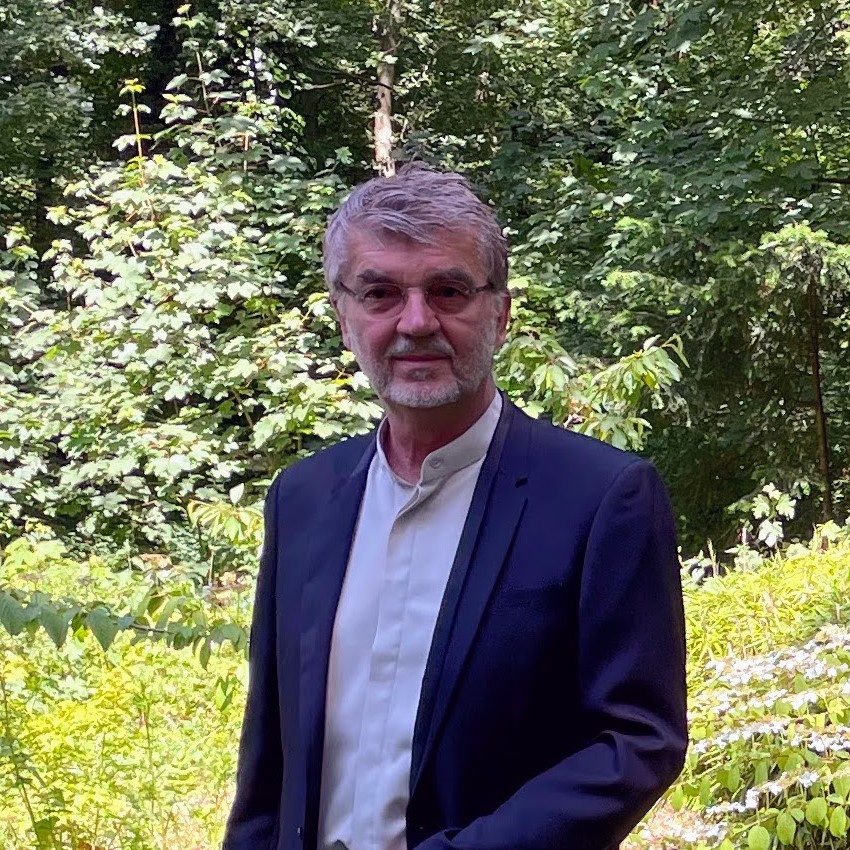
Peter Sloot
University of Amsterdam,
Founding Scientific Director of the Institute of Advanced Study in Amsterdam
Founding Scientific Director of the Institute of Advanced Study in Amsterdam
Title: Managing the future: The need to merge data- and complexity science ?
Abstract:
We live in a highly connected world, surrounded by a large variety of complex systems: from the molecules, cells and organs in our body to the people that build up our society, our cities, and our companies. The fast pace of change that we experience often exceeds our capacity to reason about it. This raises the question whether there ways where our technological and scientific innovations can keep up with the environmental-, social-, and geopolitical challenges we are facing. In this talk I will present new insights in complexity science and information processing that will help us to build predictive data-driven models of the world in which we live by uncovering causal connections that drive change and help us to nudge the systems to the outcomes we want.
We live in a highly connected world, surrounded by a large variety of complex systems: from the molecules, cells and organs in our body to the people that build up our society, our cities, and our companies. The fast pace of change that we experience often exceeds our capacity to reason about it. This raises the question whether there ways where our technological and scientific innovations can keep up with the environmental-, social-, and geopolitical challenges we are facing. In this talk I will present new insights in complexity science and information processing that will help us to build predictive data-driven models of the world in which we live by uncovering causal connections that drive change and help us to nudge the systems to the outcomes we want.
Speaker Biography:
Peter M.A. Sloot (1956) (MSc Chemical Physics UvA; PhD Dutch Cancer Institute and University of Amsterdam) is research professor at the University of Amsterdam and the founding scientific director of the Institute of Advanced Study in Amsterdam. For 10 years he was leading the Complexity Institute in Singapore. Among other tokens of appreciation, he is a laureate of the Leading Scientist President's program (2010) for his study on novel complexity models. He has been the PI of many international research programs on computational science and complex systems. Up to recently he was the editor-in-chief of two highly ranked Elsevier Science journals. Prof. Sloot is the promotor of 60 PhD theses and has published over 450 research papers. His main interest is in understanding causality in complex adaptive systems. He recently founded the Applied Complexity company to empower organizations to master complex questions through data-driven complexity models. His work is covered in international media such as newspapers, TV interviews and documentaries. For more details see: http://www.peter-sloot.com/.
Peter M.A. Sloot (1956) (MSc Chemical Physics UvA; PhD Dutch Cancer Institute and University of Amsterdam) is research professor at the University of Amsterdam and the founding scientific director of the Institute of Advanced Study in Amsterdam. For 10 years he was leading the Complexity Institute in Singapore. Among other tokens of appreciation, he is a laureate of the Leading Scientist President's program (2010) for his study on novel complexity models. He has been the PI of many international research programs on computational science and complex systems. Up to recently he was the editor-in-chief of two highly ranked Elsevier Science journals. Prof. Sloot is the promotor of 60 PhD theses and has published over 450 research papers. His main interest is in understanding causality in complex adaptive systems. He recently founded the Applied Complexity company to empower organizations to master complex questions through data-driven complexity models. His work is covered in international media such as newspapers, TV interviews and documentaries. For more details see: http://www.peter-sloot.com/.
Mo Jamshidi
Lutcher Brown Endowed Distinguished Professor Emeritus
The University of Texas, San Antonio
The University of Texas, San Antonio
Title: A System of Systems Engineering Framework for Intelligence in Autonomy, Big Data Analytic, and Applications
Abstract:
Large data has been accumulating in all aspects of our lives for quite some time. Advances in sensor technology, the Internet, wireless communication, and inexpensive memory have all contributed to an explosion of “Big Data”. System of Systems (SoS) are integration of independent operatable and non-homogeneous legacy systems to achieve a higher goal than the sum of the parts. Today's SoS are also contributing to the existence of unmanageable “Big Data”. Recent efforts have developed promising approach, called “Data Analytics”, which uses machine learning tools from statistical and soft computing (SC) such as principal component analysis (PCA), clustering, fuzzy logic, neuro-computing, evolutionary computation, Bayesian networks, deep architectures and deep learning, etc. to reduce the size of “Big Data” to a manageable size and apply these tools to a) extract information, b) build a knowledge base using the derived data, and c) eventually develop a non-parametric model for the “Big Data”. This keynote attempts to construct a bridge between SoS, engineering and Data Analytics to develop reliable models and control strategies for such systems. A photovoltaic energy-forecasting problem of a micro grid SoS, traffic jams forecasting, brain disease prediction, energy microgrid and a system of autonomous vehicles will be offered for case studies. These tools will be used to extract a nonlinear model for a SoS-generated big data. Videos for autonomous vehicles will be shown.
Large data has been accumulating in all aspects of our lives for quite some time. Advances in sensor technology, the Internet, wireless communication, and inexpensive memory have all contributed to an explosion of “Big Data”. System of Systems (SoS) are integration of independent operatable and non-homogeneous legacy systems to achieve a higher goal than the sum of the parts. Today's SoS are also contributing to the existence of unmanageable “Big Data”. Recent efforts have developed promising approach, called “Data Analytics”, which uses machine learning tools from statistical and soft computing (SC) such as principal component analysis (PCA), clustering, fuzzy logic, neuro-computing, evolutionary computation, Bayesian networks, deep architectures and deep learning, etc. to reduce the size of “Big Data” to a manageable size and apply these tools to a) extract information, b) build a knowledge base using the derived data, and c) eventually develop a non-parametric model for the “Big Data”. This keynote attempts to construct a bridge between SoS, engineering and Data Analytics to develop reliable models and control strategies for such systems. A photovoltaic energy-forecasting problem of a micro grid SoS, traffic jams forecasting, brain disease prediction, energy microgrid and a system of autonomous vehicles will be offered for case studies. These tools will be used to extract a nonlinear model for a SoS-generated big data. Videos for autonomous vehicles will be shown.
Speaker Biography:
Mo Jamshidi (Life Fellow IEEE, F-ASME, AF-AIAA, F-AAAS, A. F-TWAS, F-NYAS) received BSEE, Oregon State University, USA in June 1967, the MS and Ph.D. degrees in EE from the University of Illinois-UC, USA in June 1969 and February 1971, respectively. He holds honorary doctorate degrees from three universities in Canda, Greece, and Azerbaijan. he is the LB Endowed Distinguished Chaired Professor Emeritus at the University of Texas, San Antonio (UTSA), USA. He has been an advisor to NASA (including 1st MARS Mission), US Air Force, USDOE and EC/EU. He has over 830 technical publications including 80 books (12 textbooks). He is the Founding Editor or co-founding editor or Editor-in-Chief or honorary editor of 6 journals including IEEE Control Systems Magazine and the IEEE Systems Journal. He is an Honorary Professor of 7 universities in China, Australia, UK, and Hungary. He is a Foreign Member of the Hungarian Academy of Engineering. He has received 10 awards and medals from the IEEE, US Army, and WAC congress. At the UTSA with 115 graduate students, he was involved in research on system of systems engineering with emphasis on robotics, UAVs, AI, ML, and sustainable energy systems. He has over 15,000 citations on Scholar Google. In 2023. he has published a book “History of Persian Scientists, Poets, and Artists: 28 Centuries of Contributions” available on both Amazon and at this site ( https://history-of-persian-scientists-poets-and-artists.g3n1u5.com/ ) free in 4 languages.
Mo Jamshidi (Life Fellow IEEE, F-ASME, AF-AIAA, F-AAAS, A. F-TWAS, F-NYAS) received BSEE, Oregon State University, USA in June 1967, the MS and Ph.D. degrees in EE from the University of Illinois-UC, USA in June 1969 and February 1971, respectively. He holds honorary doctorate degrees from three universities in Canda, Greece, and Azerbaijan. he is the LB Endowed Distinguished Chaired Professor Emeritus at the University of Texas, San Antonio (UTSA), USA. He has been an advisor to NASA (including 1st MARS Mission), US Air Force, USDOE and EC/EU. He has over 830 technical publications including 80 books (12 textbooks). He is the Founding Editor or co-founding editor or Editor-in-Chief or honorary editor of 6 journals including IEEE Control Systems Magazine and the IEEE Systems Journal. He is an Honorary Professor of 7 universities in China, Australia, UK, and Hungary. He is a Foreign Member of the Hungarian Academy of Engineering. He has received 10 awards and medals from the IEEE, US Army, and WAC congress. At the UTSA with 115 graduate students, he was involved in research on system of systems engineering with emphasis on robotics, UAVs, AI, ML, and sustainable energy systems. He has over 15,000 citations on Scholar Google. In 2023. he has published a book “History of Persian Scientists, Poets, and Artists: 28 Centuries of Contributions” available on both Amazon and at this site ( https://history-of-persian-scientists-poets-and-artists.g3n1u5.com/ ) free in 4 languages.
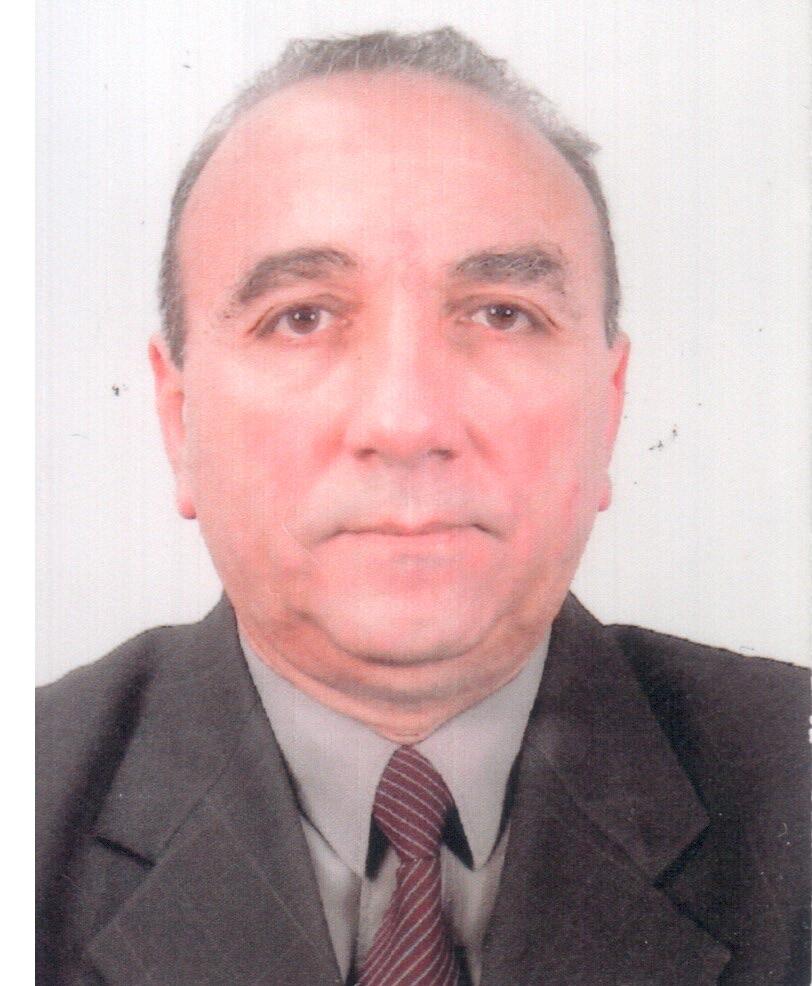
Svetozar Margenov
Corresponding Member of the Bulgarian Academy of Sciences
Title: ON THE SINERGY BETWEEN HPC AND AI IN A BIG DATA ENVIRONMENT
Abstract:
Modern computer technologies provide more and more computing power. At the same time, high-performance computing (HPC) systems are becoming more widespread. Let us note the following example, with an increasing impact on the daily life of each of us. Availability of Big Data along with the artificial intelligence (AI) tools and the fast increase of accessible supercomputing resources have set new challenges to the language and content technologies aiming at building even more innovative multilingual data products and services. The second example is a little different. Quantum computing is considered one of the most promising technological directions of strategic importance. Although they are still at an early stage of development, Quantum computing systems are already available. The synergy between advanced e-infrastructure and AI in a Big Data environment creates qualitatively new opportunities for science and innovation.
Modern computer technologies provide more and more computing power. At the same time, high-performance computing (HPC) systems are becoming more widespread. Let us note the following example, with an increasing impact on the daily life of each of us. Availability of Big Data along with the artificial intelligence (AI) tools and the fast increase of accessible supercomputing resources have set new challenges to the language and content technologies aiming at building even more innovative multilingual data products and services. The second example is a little different. Quantum computing is considered one of the most promising technological directions of strategic importance. Although they are still at an early stage of development, Quantum computing systems are already available. The synergy between advanced e-infrastructure and AI in a Big Data environment creates qualitatively new opportunities for science and innovation.
Speaker Biography:
Svetozar Margenov is a corresponding member of the Bulgarian Academy of Sciences (BAS) and a professor in Computational Mathematics. He graduated from the Faculty of Mathematics and Informatics of the Sofia University “St. Kliment Ohridski”, a PhD and a Doctor of Science form the BAS. The main scientific achievements of prof. Margenov are in the field of numerical methods for partial differential equations, numerical solution of fractional diffusion problems, multilevel iterative methods for ill-conditioned linear systems, parallel methods and algorithms, and supercomputer applications. He has published over 200 scientific papers and two monographs. Svetozar Margenov is the director of the Institute of Information and Communication Technologies (IICT-BAS) and head of the Department of Scientific Computing. He is a co-founder of the Bulgarian section of SIAM and its chairman for the first two mandates. Prof. Margenov has made a great contribution to the development of the modern Bulgarian HPC infrastructure and a high level of expertise in HPC applications. He currently leads the Center of Excellence in Informatics and ICT, within which the last Bulgarian petascale supercomputer HEMUS was recently opened. Prof. Svetozar Margenov was awarded by the BAS with the badge of honor "Marin Drinov" on a ribbon.
Svetozar Margenov is a corresponding member of the Bulgarian Academy of Sciences (BAS) and a professor in Computational Mathematics. He graduated from the Faculty of Mathematics and Informatics of the Sofia University “St. Kliment Ohridski”, a PhD and a Doctor of Science form the BAS. The main scientific achievements of prof. Margenov are in the field of numerical methods for partial differential equations, numerical solution of fractional diffusion problems, multilevel iterative methods for ill-conditioned linear systems, parallel methods and algorithms, and supercomputer applications. He has published over 200 scientific papers and two monographs. Svetozar Margenov is the director of the Institute of Information and Communication Technologies (IICT-BAS) and head of the Department of Scientific Computing. He is a co-founder of the Bulgarian section of SIAM and its chairman for the first two mandates. Prof. Margenov has made a great contribution to the development of the modern Bulgarian HPC infrastructure and a high level of expertise in HPC applications. He currently leads the Center of Excellence in Informatics and ICT, within which the last Bulgarian petascale supercomputer HEMUS was recently opened. Prof. Svetozar Margenov was awarded by the BAS with the badge of honor "Marin Drinov" on a ribbon.